Thursday, March 28, 2019

How We Travel

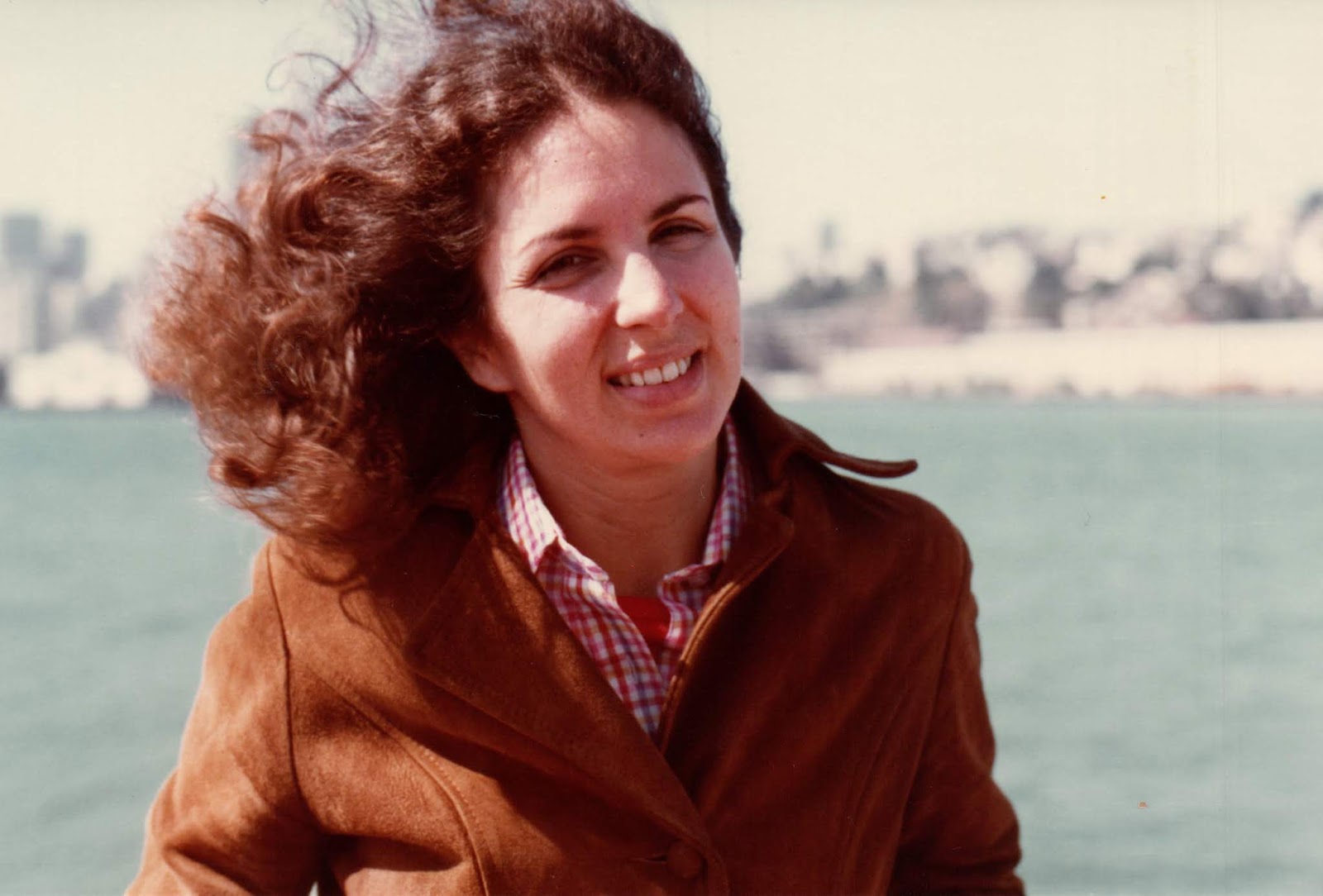
The photo shows Judy outside of Gontran Cherrier. She is smiling because of the two croissants in her bag

A recent profile in the New York Times on travel celeb Rick Steves caused us to reflect on the choices we have been making about travel.  

For many people making travel plans, the goal is to find airfare and hotel bargains.  When we were young, we didn’t have much money and so finding inexpensive ways to travel was necessary.  We avidly read Europe on Five Dollars a Day, and the less spartan and more discerning Let’s Go series.  Steve went to Europe after his college graduation for 3 months on $600 plus airfare on a charter flight.  Needless to say, he was frugal on meals and where he stayed.  After spending a night at a truly horrid hostel in Amsterdam (big dorm style room with 40 or so people and no working plumbing), he upgraded to B&Bs, which consisted of 1 or 2 rooms in a person’s apartment and small hotels. Most were OK, and there were a few memorable experiences.  In Paris, the two guys he was traveling with, Steve Daniels and Ed Tobes, and Steve paid $2.00 apiece for an attic room 5 stories up in a small left bank hotel called Hotel Nesle.  The hotel was a few steps from the Seine and was run by an older couple.    Every morning the husband, who was blind, would climb the twisting stairway to the fifth floor room, carrying a tray with fresh warm croissants, coffee and hot chocolate.  Steve has loved Paris ever since.  

For Steve, frugality on that trip was a necessity.  People like Rick Steves have made it a virtue.  He recommends out-of-the-way hotels with bathrooms down the hall and restaurants where price trumps taste.  (That’s a phrase that has lots of applications).  Several years ago we traveled with Judy’s parents, and her father, a Rick Steves aficionado, insisted we select restaurants recommended by Steves and eat only the daily specials.  The specials were required by law in Spain and were low priced and mostly inedible.  We rebelled quickly and began ordering from the menu. Since we both grew up with depression-era parents, it has been hard to break the habit of always looking for the lowest price.  However, now that we are in this phase of life, we are trying to make conscious choices about the value of the money we are spending.  

Many travel sites and even mainstream magazines like Money make finding the best price on airfares and hotels the priority.  But through trial and error, we have found it is worth paying a bit more for direct airline routes that avoid excessive layovers and for hotels that are comfortable and well located.  We are not extravagant, and we don’t go to fancy hotels, but we are not 21 years old traveling with backpacks, and so paying for ease and comfort makes travel more pleasant.  In the past, we might have booked the smallest room available or sought out the cheapest (clean) hotel.  Now we consider several sizes of rooms and think about what it will be like to stay in it.  Will there be a comfortably large bed?  Will there be chairs for reading and a table so that we can have snacks in our room?  

Our big splurge has been switching to business class on overseas flights.  We began when we went to India two years ago, and realized that we would survive the grueling trip better with the flat beds available in business class. It was worth the extra cost.

As for restaurants, Judy is skilled at finding interesting places on the web and in food magazines. Most places we go to are fairly reasonable with the occasional splurge, like when we were able to get a reservation at Massimo Bottura’s restaurant, Osteria Francescana, in Modina, Italy, a few years ago. Having said that, we have learned that we are not large breakfast eaters, so we tend to find excellent bakeries and coffee shops.  When we are going to eat a large meal, we prefer to have it in the middle of the day, especially in Europe, where dinners tend to start quite late.  That way we can buy a little snack when we are hungry for dinner.  These choices are actually quite economical, when you think about it.

We have finally realized that we have the resources to make travel comfortable.  As we said, it took a little work, but we broke the habit of looking for the lowest price ticket or hotel room, and instead thought about what would contribute to an enjoyable experience.  Why scrimp when we don’t have to, and when we might not get back to our destination again?

As for Paris, we have found a hotel at the edge of Montmarte that is comfortable, well-located, and moderately priced.  And we can walk out the door and down the block to a bakery, Gontran Cherrier, with the best croissants and baguettes we have ever had.


Saturday, March 23, 2019

Too Old to Be President?


Translated from Swedish:  Old-but vital

With Bernie Sanders and Elizabeth Warren already in the 2020 presidential race and Joe Biden about to throw his hat in the ring, it seemed a good time to raise the question about whether someone could be too old to be considered for President.  

Bernie Sanders is 77. Joe Biden is 76.  Elizabeth Warren is 69.  And the current White House occupant is 72.

A 16-year-old Bernie supporter recently was quoted saying that it was ageist to say he is too old to be President.  It’s real progress that a 16-year-old knows the term “ageist.” We have always believed that age should not be a barrier, that older persons in good health should be able to do whatever they wanted.  And there may be roles where they excel.  Supreme Court Justice, for example. 

But does age bring some limits?  The most obvious barrier is that being President is a strenuous job.  There are long days, continual demands, people to meet, places to go.  The physical demands wear out younger people.  We are both in good health and exercise daily, but we know we do not have the endurance that we had in the past for long hours of work.

History is not a good guide when it comes to the age of presidents.  During the 19thcentury, the two of the oldest Presidents when they took office were William Henry Harrison at 68 and Zachary Taylor at 65. Old Tippecanoe, as Harrison was called, caught pneumonia riding to his inauguration and died a few weeks later. President Taylor died of a bacterial infection two years after assuming office, leaving the country deeply divided and on a path toward Civil War.  

Of course, health care is much better now and a 75 year old person today is much more likely to live another 10-15 years.

The counter argument is that age might confer advantages of wisdom and good decision-making (although there's precious little of it in evidence from the current White House).  We found a ranking of American presidents from best (Lincoln) to worst (Trump) that was compiled by a panel of 200 members of the American Political Science Association’s Presidents and Executive Politics Section.  We correlated their rankings with age of presidents when taking office.  The correlation was a non-significant .21 between higher age and worse ranking.  And the correlation is slightly inflated.  It hardly seems fair to rank William Henry Harrison near the bottom (42ndout of 44) when he really never served as president.  But there is little to guide us about people over 70.  Only two presidents have been elected who were over 70 in their first terms, Reagan (ranked 9th) and Trump.  

One concern is that an older president might develop dementia.  Incidence of dementia rises steadily through the 70s into the 80s.  Although it remains somewhat controversial, there does seem to be evidence that President Reagan experienced early changes associated with dementia in his last years of office.   Whether he was impaired or not in his last years in office, President Reagan relied on his staff and cabinet to set the overall course of the administration, and so any problems he might have been having were not reflected in how the government ran.  Another president suffering cognitive problems could ignore advice and implement policies that were destructive.  

Two other presidents experienced significant impairments in office.  President Woodrow Wilson suffered a severe stroke in 1919.  He was 62.  His wife kept him hidden from the press and public, and made all the key decisions for him the rest of his term, which ended in April, 1921. Franklin D. Roosevelt, by most measures one of our greatest presidents, experienced declining health in his third term, and there were periods of time when he stayed out of the public eye because of his poor health.  Yet he ran for and won a fourth term, only to die soon after his inauguration at age 63.

Given modern media coverage, it is unlikely that illness or incapacity of a president could be hidden. But early changes associated with dementia can be subtle and readily denied, especially by the person experiencing those symptoms.  It is also not at all certain that the President’s cabinet or Congress would put national interests ahead of politics to invoke the 25thAmendment, should a president seem incapacitated.  

What about a Beto-aged (46) president?   Besides bringing energy to the job, a younger person may be more likely to have fresh perspectives and to understand the impact of new trends and technologies.  The record on young presidents is mixed.  Jefferson (age 44) and Teddy Roosevelt (age 43) were ranked 5thand 4th, respectively in the survey.  Barak Obama was ranked 8th in the survey.  Other young presidents had more uneven records, such as Clinton and Kennedy, though Kennedy’s presidency was cut short.  One “young” president, Franklin Pierce, was a clear disaster.  

So in the end there is no clear answer. We want someone with great ideas and also the skill and experience to get an agenda through Congress that addresses the country’s most pressing issues.  If that turns out to be Bernie, Joe, or Elizabeth, we will support them.  But stamina and  health could become concerns.

The link will take you to a summary of rankings of Presidents mentioned above.


Sunday, March 10, 2019

Downsizing, Part 2: Steve


Do we need two cars? That’s a downsizing issue where, if you’ll pardon the pun, the rubber really hits the road.  

From an economic perspective, it made sense to go down to one car.  Since moving to Pittsburgh, we have mostly gone out together, and so one car was always sitting in the garage.  And by going down to one car, we would save money.  Car insurance, maintenance, repairs, registration.  With the money we saved, we could rent a car or use cabs if we found ourselves in a situation where we needed a second car. Or we could use a city bus, which is free for seniors.  

But owning a car is also an emotional issue.  We are not at the crisis point of giving up driving, but having our own car has always been important to each of us.  It means control and independence.  We could go off whenever we want without inconveniencing the other person, at least in terms of not taking away their transportation.  We have had our own cars for as long as we have known each other. 

And in going down to one car, we would have to choose whose car to keep.  We have strong preferences about what we drive, though we did make compromises in the past—Judy drove minivans for years that transported the kids to college, and when our youngest son finished college, she got a sporty SUV and I took over driving her minivan, which we needed for transporting our greyhounds.  Now past the days of kids in college and dogs, we both were able to buy cars that we liked. I got a small SUV that was sporty and nimble in traffic.  Judy got a midsize SUV with terrific pick up and comfortable seats.  It has been our road car because it is comfortable and safe, so it has more miles on it than my car.  Both cars have modern safety features.

So what do we do?  One or two cars?  And if we went down to one car, whose car would we keep?  More importantly, how would we each react to not having our own car?

We took the plunge, and sold my car.  Although it was newer and had less mileage on it, we felt that we should keep the better road car.  There have been benefits.  The small garage in our apartment has been much more manageable with one car.  Once we move, we will have a bigger garage, but the extra space that results from having one car will mean we can use part of the garage for storage.  Our monthly expenses have gone down.  And on the emotional side, it is working out fine.  


We used this photo before, but thought showing  a small car would fit the topic.  And what is smaller than the Renault that belongs to our friend, Gerdt Sundström.   The translation for the bumper sticker is “Old, but vital.”   


Downsizing, Part 1: Judy

Judy's new kitchen

It's been quite a journey.  When we sold the oversized house in State College last year our plan was to rent for a year until we knew where we would be living long-term.  The apartment was in the perfect location, across the street from Sam's school and walking distance to the Squirrel Hill businesses.  We revived our old city living skills, and have enjoyed walking to restaurants and walking around the neighborhood.

We put a lot of ourselves into the State College house, personalizing the space and updating everything mechanical until it was in tip-top condition.  Still, that meant having close relationships with our handyman and plumber, as well as other contractors.  It was, after all, a close to 50 year old house.  When we made the decision to move, we vowed to avoid the pitfalls of an old house, sitting on shale, in the forest.  We imagined that we'd find a house where most things had been updated, but we would remodel the kitchen and probably a master bathroom.  

Once we moved to Squirrel Hill, we began walking in the neighborhood, which is filled with absolutely gorgeous period houses from the early parts of the 20th century, of all sizes and design.  At first, we'd look for moss on the roof or evidence of leaking and congratulate ourselves for not being willing to take that on again.  Many of the houses are quite large, so we'd again be proud of ourselves for not wanting that at this time of our lives.  Nor did we want to take on a large yard.  Plus because of the nature of the landscape, the sidewalks are uneven and there are often steep slopes up to the front door or garage.  Some of the streets are made of brick, which play havoc on car transmissions.  But as time passed, we found ourselves looking at the houses for sale in the area and began seeing ourselves in something with beautiful wood and stained glass and enough space to have our whole family together again.  

About two months ago we started going to open houses...just to look.  It is always a shock to see how much smaller houses are without the benefit of the fish-eye lens realtors like to use in on-line real estate sites.  The houses in our price range had small rooms, and the kitchens were both small and would be difficult to enlarge, particularly when you look at removing 100 year old walls.  You can do it, but just because you can doesn't mean you should.  Then we started looking at larger homes so that we wouldn't have to move walls in the kitchen.  What we saw was work to be done everywhere, and unfortunately, we'd feel compelled to do it.  And as our son reminded us, it doesn't exactly make sense to buy a house to fit the whole family when that only happens once or twice a year.  

The other thing that started to happen was that we expanded the area we would consider living in to include some houses that were being "flipped."  These houses would have all the electrical and plumbing upgraded and have modern finishes.  This was attractive because we could just move in, rather than be under construction for months.  But I wasn't sure I'd be happy with someone else's choices in the kitchen.  And the locations tended to be near transitional areas or on busy streets where flippers could buy property cheaply, upgrade them, and make a profit.

About a week ago a townhome showed up in South Squirrel Hill.  I looked at the photos and I said to Steve:  "That's my kitchen and bathroom!"  This is a one-year-old townhome in a planned community.  The sellers had expected to settle here long term and put in every single upgrade available, up to and including a Blue Star stove and a kegerator (something we would never have considered, but it turns out you can use it to make seltzer).  Then one of the sellers got a job offer she couldn't refuse, and they had to put it up for sale.  We went to see it last Wednesday, and it was light and spacious, and with a little more pruning of our belongings, it will fit us perfectly.  We even get a view of the Monongahela river from the balcony off of the master bedroom.  So we'll be moving there May 3.

We are feeling very lucky not to have followed our hearts down a very complicated road with a historic house.  With this decision, we are truly down-sizing to something that fits where we are in our lives right now.  We still have 2000 square feet of space, and we have the amenities we want in the important areas of the house.  But we won't have yard work, snow removal, or costly repairs.  There's even a pool in the community that we can take the grandkids to.  Our daily walks around the neighborhood will change, so instead of looking at 100-year old houses, we'll be looking at modern versions of classic Pittsburgh-style houses. 

In the end, we listened to our heads and made the more practical decision, but we both really love it, too! 


Wednesday, February 27, 2019

Our visit with a geriatric physician


We had our visits at the Senior Care Institute at UPMC Shadyside last Friday. They
scheduled our appointments back-to-back, and advised us to allow up to three hours
to meet with various members of the team. There were careful instructions on
where to park and how to find the office, and an introduction to the various things
that might happen in an initial appointment. The doctor’s office called several days
ahead of time to ask the nature of the visit, whether we had any specific medical
issues, and whether we wanted to meet with a social worker. We had filled out a
health history form, and brought it with us along with previous medical records,
advance directives, and medical powers of attorney.
Steve met with a nurse practitioner and I saw a geriatric resident. The resident had
read all of the materials and had five points she wanted clarified. In the previous
experience, I found it annoying to have filled out all of the information ahead of time,
only to have the initial contact person ask all of the questions again. After she
examined me and we discussed my goals for the visit, she relayed that information
to the doctor. They returned together and the doctor proceeded to introduce me to
his practice, which is run like an “old fashioned general practice,” despite being
housed in a modern medical center. There are five geriatricians who rotate call on
weekends, but during the week they answer their own patient’s calls. And
whenever there is a test result to be shared, it is your doctor who makes the call. He
spent time getting to know me and what I was hoping for in coming to the practice,
and was genuine and self-disclosing enough to make me feel that we were beginning
a real relationship. It reminded me of what medical care used to be before
insurance companies started calling the shots.
Steve’s experiences were similar. His conversation with the physician was positive
and collaborative. And it didn’t hurt that he started off saying he was familiar with
Steve’s research.
There is an art to the practice of medicine that is more than the sum of the numbers
in an algorithm. We’ve always known that best diagnosticians are doctors who have
seen many and varied patients, and who can recognize patterns of symptoms as well
as unusual variations. These very special doctors allow themselves time to get to
know their patients well, including listening carefully to what they say and how they
say it. They use clinical data as a supplement to their own judgment, not as a
substitute for it. They use current research where applicable, but their medical
practice does not come from the evidence-based cookbook. Most importantly, they
recognize that for any medical intervention to work, there has to be a relationship of
trust and collaboration between doctor and patient. The Senior Care Institute has
these same principles as their credo, and as far as our first experience went, we felt
respected and heard and understood. To paraphrase Humphrey Bogart in
“Casablanca,” I think this could be the start of a beautiful relationship.

Friday, January 25, 2019

When Is It Time to Worry about Your Memory, And When Isn’t It Time to Worry?


 Here we are circa 1980 on a ferry in San Francisco Bay around the time we were teaching memory training classes

Memory is quite probably the most common problem discussed by older people.  We did work on memory early in our careers and revisited the issue recently.  Judy’s sister Connie invited us to give talks in the lecture series at the 55-plus community where she lives.  She mentioned how many of the people she knew were concerned about their memories, and so Judy decided to give a talk about memory.   

Sixty people came out to attend the talk on a cold and blustery night two days before Thanksgiving. They were engaged and had lots of questions.  Their worry, of course, was that their everyday memory lapses – not remembering a name, forgetting where they put something, walking into a room and not remembering why they had gone there – were early symptoms of Alzheimer’s Disease. Judy explained that there are some normal and expected changes in memory with aging.  We have trouble remembering names or words because of interference. That is, by the time we reach 60 or 70 or more, we have to sort through more information to come up with the name or word we are looking for.  There is also a general slowing of cognitive processes, which affects learning and recall. Anxiety about memory can make remembering more difficult.  Some commonly used medications can increase memory problems.  But the everyday episodes of forgetting are normal and don’t indicate anything worse.

In the early 1980s, we ran memory training classes for older people.  We taught them techniques for dealing with common problems, such as learning names of people more effectively or remembering a shopping list.  We also discussed the difference between normal memory and the more disruptive changes with dementia.  At the end of the classes, people had fewer concerns about their memory.  They said, however, it was too much bother to use the memory techniques.  What they got from the class was the assurance that nothing was wrong with them.  

Today we are bombarded with information about Alzheimer’s disease and other forms of dementia.  A week does not go by without another study being reported in the media that identifies risk factors or potential ways of preventing Alzheimer’s.  Food, supplements, exercises, meditation, loneliness, social engagement, being a volunteer, having done well in high school (really!) and being married have all been identified in studies as risks for or protection against dementia.  But most of these factors have no plausible or identified link to the pathologies that cause dementia.  All the flurry of pronouncements does is place the blame on people with dementia for not living the right ways while raising everyone else’s anxiety.

There are sensible things to do.  Regular exercise and staying at a healthy weight can potentially prevent some of the pathologies that exacerbate dementia, such as cardiovascular disease.  If occasional memory problems are a bother, you can use techniques to improve how you learn and remember or that focus your attention better so that you take in and retain information more effectively.  You can write down the things you want to remember and unlike the people in our memory classes 40 years ago, you can ask Siri for help with a name or word.  Or like the people in our classes, you can decide the everyday problems are normal and then go on with your life.

There are also times to get help.  Judy always says that when you can't remember that you can't remember, it's time to get help (although it will be someone near and dear to you who makes that observation).  If your memory is getting worse over time, if you cannot hold onto a thought at all, if you can’t remember how to do something or are getting lost in familiar places, then it’s time to seek help.  

Thursday, January 3, 2019

Geriatricians

The Jules Verne carousel in Lyon, France

One of the things about being in your seventies is that you have lived in your body for a long time.  You've dealt with its strengths and weaknesses, and you've likely gone through some illnesses or injuries.  You've also dealt with doctors to varying degrees, depending on your health and your inclination.  When we were living in State College, we had warm, collaborative relationships with our providers, in part because of Judy's professional exchanges with them, but also because they knew us and our expertise and respected us for it.  We've been fortunate to have been quite healthy, and our doctors were supportive of our "less is more" approach to medications and procedures, especially because we could back it up with research.


When we moved to Pittsburgh we ran into a long-running feud between Highmark and UPMC.  UPMC is definitely the big dog in town, but our insurance through Penn State is Highmark.  So we took the doctor-dating questionnaire and were matched with a Highmark provider that was supposed to want to work to minimize medications and work collaboratively with us.  We waited four months to see her, and then in the initial 20 minute visit, we felt rushed, not listened to, and squished into a checklist-inspired box of 70-plus year olds who should take a fistful of medications to meet the insurance criteria.  Let's just say we weren't happy campers.  We were looking for more of a guide than a policeman.

After some reflection and not a little bit of frustration, we are starting over.  In discussing our treatment with our friend who is a geriatrician, it dawned on us that a geriatrician is exactly what we want.  After all, we are now geriatric.  Or as our 6 year old grandson Sam introduces us, “These are my grandparents. They are really old.”  He actually says this proudly, adding that Steve is very strong, because he goes to the gym every day.

We weren’t looking for a credential necessarily but a perspective on aging and health that characterizes geriatric medicine.  Here are the things that we believe represent the core of geriatrics:

·        -A collaborative relationship with a physician.  Geriatricians take the time to get to know their     patients and their patients’ goals.  There will be times when treatment for a health problem conflicts with goals.  A patient may make a choice to refuse treatment based on quality of life.  A geriatric physician will explain the options for treatment so that patients can make their choice.  We don’t want a physician who just ticks off boxes of things to do prescribed by our Medicare plan, but one who supports our choices.

·        -All medications have the potential for adverse side effects.  The more medications someone takes and the longer they take them, the greater the potential for side effects.  Judy certainly saw that year after year in her practice.  In fact, depression and anxiety as side effects of medications was one of the most frequent problems she saw.  One of the hallmarks of geriatric practice is “start low and go slow,” when introducing a new medication.  Another hallmark is recognizing that too many medications can be adversely affecting cognition, mood and energy levels.  Less can be more.  And sometimes lifestyle modification is the most potent medication there is.

·        -Aging involves chronic illnesses, which by definition cannot be cured.  But often it is possible to improve functioning and adaptation to an illness through rehabilitation, life style changes and home modifications.  And we would be remiss if we did not add, psychological support.

In effect, geriatric medicine does not strive to make us young again.  Any intervention has its trade-offs.  Taking an antibiotic has clear, immediate benefits that most of the time will outweigh adverse effects.  By contrast, taking medications that might prevent a stroke or heart attack for someone who has no risk factors may not be worth the possibility of adverse effects.  Some things can’t be treated or should not be treated.  For example, a little bit of hypertension may be helpful in maintaining cognitive functioning in old age.  

Having mulled on these issues, we have decided to go to a geriatrician as our primary care physician. We have an appointment in a couple of months.  The get-acquainted appointment is not 20 minutes, as was the case in our last primary care physician, but they've asked us to allow 3 hours, so we can meet with the whole team.  We’ll let you know how it goes.


We are no longer on Facebook.  If you like our blog, please tell your friends about it.